Beyond the Hallway: Insuring and Securing a Scooter That Lives Outdoors in Bath
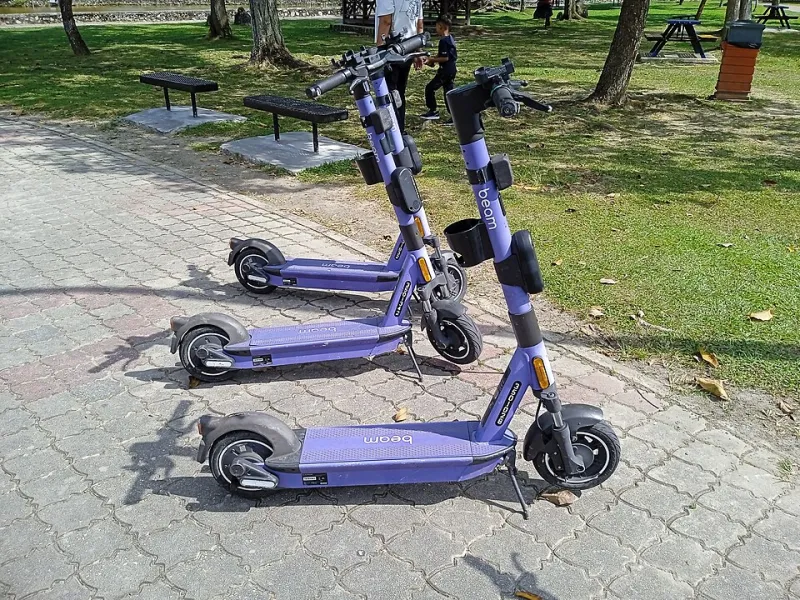
Photo: Wiki Farazi, CC0, via Wikimedia Commons
Bath's housing stock is charming but not always generous. Terraced streets, shared passages, small yards and outbuildings mean that a mobility scooter cannot always sleep indoors. For some households the machine lives under a cover in the yard; for others it sits in a shed at the end of a garden or in a locked store off a communal passage. Where the scooter is kept has a direct bearing on how well it is protected, both physically and financially.
This article sets out what UK home insurance commonly does and does not cover, how specialist mobility scooter policies differ, and the practical measures that make theft less likely and recovery more possible. It is general guidance rather than a substitute for reading your own policy wording or speaking to a broker.
What Standard Home Insurance Usually Covers
Home contents insurance is designed for possessions kept in the home. Most policies extend some cover to outbuildings, garages and sheds, but the limits are often modest and may apply only to certain types of property. A mobility scooter is a high-value item, and insurers frequently require it to be listed separately if it is kept outside the main dwelling.
Two distinctions matter. First, theft from a shed or outbuilding may be covered only where there is evidence of forced entry, and the payout may be capped well below the cost of a replacement. Second, a scooter may be treated as a vehicle rather than a household possession. Some contents policies exclude mechanically propelled vehicles, or apply a much lower limit for them. The phrase 'away from home' cover is also worth checking: it may provide limited protection when the scooter is used elsewhere, but it is rarely a substitute for dedicated cover.
Buildings insurance is a separate matter and does not cover the scooter itself. If you rent, your landlord's policy will not cover your belongings. If you live in a flat with a shared passage or communal store, the freeholder's insurance may cover the building but not your equipment.
The practical step is to read the policy schedule and the general conditions, not just the summary. Look for the outbuildings limit, the single-item limit, any vehicle exclusion and the security requirements attached to theft claims. If the wording is unclear, ask the insurer to confirm in writing how an outdoor-kept scooter would be treated.
When Specialist Mobility Scooter Insurance Makes Sense
Dedicated mobility scooter insurance is available from several UK providers and is built around the way these machines are actually used. Policies commonly offer theft cover, accidental damage, public liability and breakdown recovery. Public liability is particularly valuable: a scooter can cause injury or damage, and a claim can be costly even when the incident is minor.
Insurance is not a legal requirement for private scooter use in the UK, but it is strongly advisable, especially for Class 3 scooters used on the road. Premiums are influenced by the scooter's value, your postcode, where it is stored and the type of lock used. A policy that requires a Sold Secure lock or a ground anchor is not being difficult; it is reflecting the reality that most thefts are opportunistic.
Before buying a policy, compare the excess, the maximum payout, the recovery arrangements and whether the battery and charger are included. Check whether the insurer requires the scooter to be kept in a locked building at night. If your only option is a yard or an open passage, say so at the quotation stage rather than discovering the restriction at claim time.
Security That Insurers Notice
A lock is only useful if it is used consistently and attached to something that will not move. A chain around the scooter's own frame is easily lifted; a chain through a ground anchor set into concrete is not. Sold Secure Gold or Silver locks are widely recognised, and a heavy-duty shackle or chain combined with an alarm can make a scooter a less attractive target.
Covers should be breathable and fitted rather than a loose tarpaulin that traps condensation. Remove the key and, where the design allows, take the battery indoors. Keep the shed or store in good repair, with a solid lock and, if possible, a battery-powered alarm. A simple gravel path or motion-sensitive light can also deter a casual thief.
Marking is equally important. Record the serial number, which is usually stamped on the frame or under the tiller, and photograph it alongside the scooter. Add a postcode and house number using a UV pen or engraved plate, and register the machine on a recognised property database such as Immobilise. Keep the purchase receipt, service records and any distinguishing photographs in one folder, ideally with a digital copy.
The Paper Trail That Helps Recovery
If a scooter is stolen, information is the difference between a faint hope and a workable investigation. The police will ask for the serial number, a description and any marks that make the machine identifiable. Insurers will ask for proof of ownership, the crime reference number and details of the security that was in place.
Report the theft to Avon and Somerset Police as soon as you reasonably can, using 101 or the online reporting service. Obtain a crime reference number and keep it safe. Notify your insurer within the timeframe set out in the policy. If the scooter was kept in a communal area, tell the managing agent or landlord as well, both for security reasons and because other residents may be affected.
A Calm Checklist If the Scooter Disappears
Begin by confirming that the scooter has not been moved by a family member, neighbour or contractor. Check whether the local council has removed it during works. Then work through the following steps in order.
- Report the theft to the police and note the crime reference number.
- Inform your insurer promptly and follow its claim instructions.
- Gather the serial number, photographs, receipt and service records.
- Register the theft on Immobilise and any local community alert scheme.
- Tell your mobility dealer, who may be asked to watch for the machine.
- Keep a written log of calls, names, dates and reference numbers.
Do not confront anyone you suspect. Do not move or disturb anything that may hold forensic evidence.
Talking to Insurers Without Overclaiming
Honesty is not only a condition of most policies; it is the most reliable route to a fair outcome. Describe where the scooter was stored, how it was locked and when you last saw it. Avoid saying it was 'fully secure' if the shed lock was broken or the cover was loose. If a modification was made, such as a different battery or a fitted canopy, disclose it.
Do not inflate the value or describe the scooter as newer than it is. If a claim is declined, ask for the decision in writing and use the insurer's complaints procedure. If the matter remains unresolved, the Financial Ombudsman Service can review it. A calm, factual approach is far more effective than a heated one.
A Workable Arrangement for Bath Homes
For many households, the answer is a combination of measures rather than a single fix: a locked, anchored store; a recognised lock; marking and registration; and insurance that matches the reality of outdoor storage. Where a shared passage is the only option, discuss the arrangement with neighbours and the landlord, and check that the fire risk is not increased by blocking an escape route.
A scooter kept outside can still be a well-protected scooter. The aim is not to eliminate every risk but to make theft difficult, recovery possible and financial loss manageable. With the right paperwork, the right lock and the right cover in place, an outdoor charging spot need not be an anxious one.