The Badge Belongs to the Person: Parking with a Blue Badge in Bath
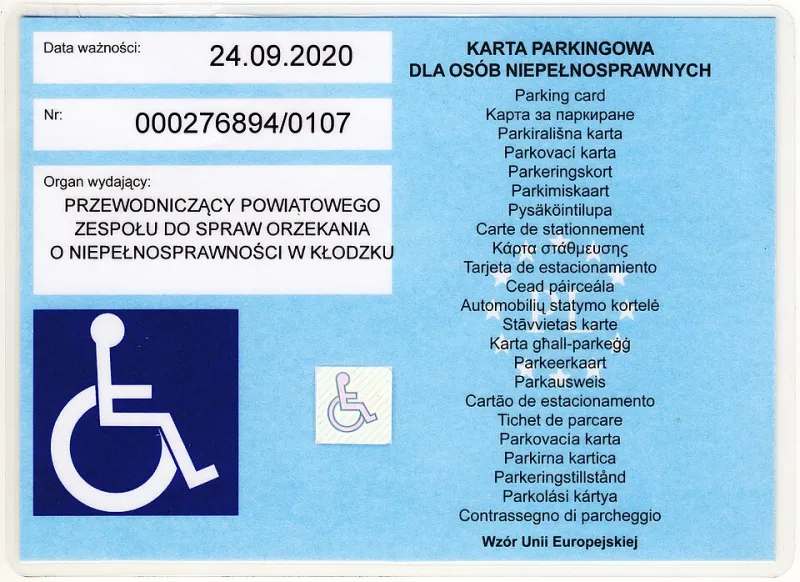
Photo: Jacek Halicki, Public domain, via Wikimedia Commons
For disabled people and older residents, the Blue Badge can turn a difficult journey into a manageable one. It can also create confusion, particularly in a city like Bath where narrow streets, historic kerbs and busy car parks demand a little forethought. This guide sets out how the scheme works in practice, with attention to the rights of the badge holder, the role of the driver, and the realities of parking in and around the city.
What the badge is, and what it is not
The Blue Badge is a personal parking concession issued by the local council. It belongs to the named holder, not to a vehicle, a family, or a scooter. The badge can be used in any vehicle in which the holder is travelling as driver or passenger, provided the correct side is displayed and the journey is for the holder's benefit. It cannot be lent to friends or relatives, and it should not be used after the holder has left the vehicle so that someone else can park.
A common misunderstanding is that the badge gives the driver rights. It does not. The driver may be a spouse, a friend, a paid carer or a taxi driver. The concession applies because the badge holder is present and travelling. If the badge holder is not in the vehicle, the badge should not be used. That distinction matters in Bath, where parking is tight and enforcement is routine.
Who qualifies in England
Eligibility is set by central government and administered by Bath & North East Somerset Council. Some people qualify automatically, for example those receiving the higher rate mobility component of Disability Living Allowance, eight or more points under the moving around descriptor of Personal Independence Payment, or certain war pensions. Others may qualify under discretionary criteria, where walking is very difficult or would cause serious risk to health. Applications need supporting evidence, and badges have a photograph and an expiry date. Report a lost or stolen badge promptly, and do not buy one from an unofficial seller.
Scooters, powered wheelchairs and the badge
A Blue Badge is displayed in a vehicle. It is not a licence to park a scooter or powered wheelchair in a car parking bay, and it does not override pavement or pedestrian-zone rules. The practical use is this: if the badge holder travels by car to Bath, displays the badge in that car, then transfers to a scooter or powered wheelchair for the final part of the journey, the badge has done its job. If the scooter is the only mode of transport, Blue Badge parking concessions do not apply to the scooter itself. Scooter users should use designated parking or secure storage where available and follow local rules on pavements and pedestrian areas. The badge remains with the person; it is not fixed to the scooter.
On-street bays and car parks in Bath
Bath's centre has narrow streets, listed buildings and limited space. On-street disabled bays are usually marked clearly, often with a white wheelchair symbol. Some are free and without time limit for badge holders; others have signs that impose a limit. Pay-and-display bays may also be free for badge holders, but the sign is the authority. Do not assume that a bay is unrestricted simply because it is marked as disabled.
Council car parks can be more reliable for transfers. Accessible bays are often wider and placed near lifts or exits. Charges and time limits vary, so read the tariff board before leaving the vehicle. A badge does not automatically make every car park free. The useful question is not only whether you can park, but whether you can open the door, deploy a ramp, and reach the pavement safely. In a historic city, a slightly longer walk from a well-chosen bay can be easier than a tight space closer to the shops.
Timed bays, pedestrian zones and other pitfalls
Timed bays are a frequent source of misunderstanding. A badge holder may be exempt from payment but not from a time limit, or the reverse. The sign at the bay takes precedence over general advice. Pedestrian zones are another area where the badge does not act as a master key. Access restrictions, bollards, loading windows and camera enforcement still apply. In England, badge holders may park on single or double yellow lines for up to three hours where there are no loading restrictions, but this is not a blanket permission and local signs can override it. The safest approach is to read the sign, check the council's parking guidance, and avoid relying on memory.
A short planning routine for a Bath day out
- Check the badge. Confirm it is in date, the photograph is visible, and the correct side is displayed.
- Choose the destination by bay, not by shop. Identify a known accessible bay or car park with a transfer space.
- Read the signs and the council's parking page before setting out. Note any time limit.
- Plan the transfer. Decide which side the door or ramp needs, and allow extra time.
- Have a backup. Identify a second car park or a drop-off point in case the first is full.
- Keep the badge with the person. If the holder leaves the vehicle, the badge should not be left on display for someone else's use.
Bath is a compact city, but its streets reward preparation. Used correctly, the Blue Badge reduces guesswork and protects the independence it was designed to support. For equipment advice before a trip, Bath Mobility Store can help with scooters, walking aids and home adaptations that make the journey from car to pavement safer.